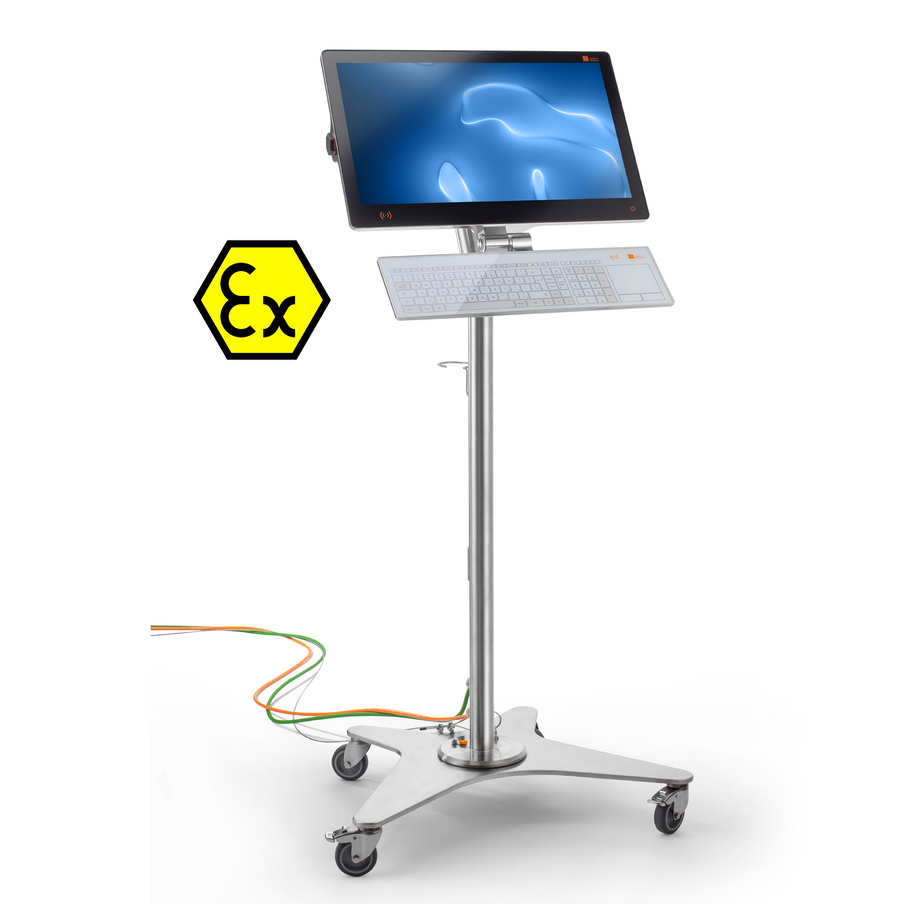

EX CERTIFICATION ACCORDING TO ATEX/IECEx
Our EX devices are certified for use in hazardous areas classified as ATEX/IECEx Zone 2 (gas) and Zone 22 (dust), as well as for the North American market in accordance with Class I & II, Division 2 (Groups A–D, F, G) and Class III. In addition, they meet the requirements for Zone 2 (Group IIC) in accordance with NEC 505 and for Zone 22 (Group IIIB) in accordance with NEC 506.
For requirements in Zones 1 and 21, we would be happy to advise you and offer suitable solutions through our partners.
FULLY ENCLOSED STAINLESS STEEL HOUSING
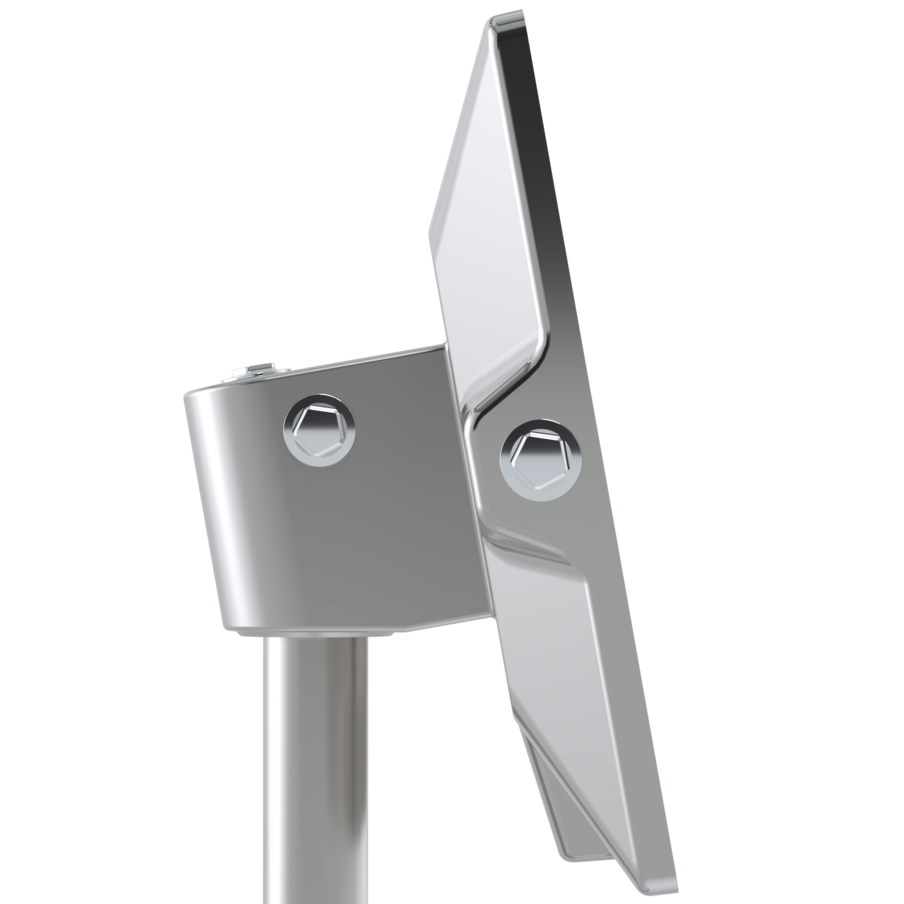
Electropolished 1.4404/316L stainless steel housing with IP66/67 protection rating for easy cleaning and maximum durability.
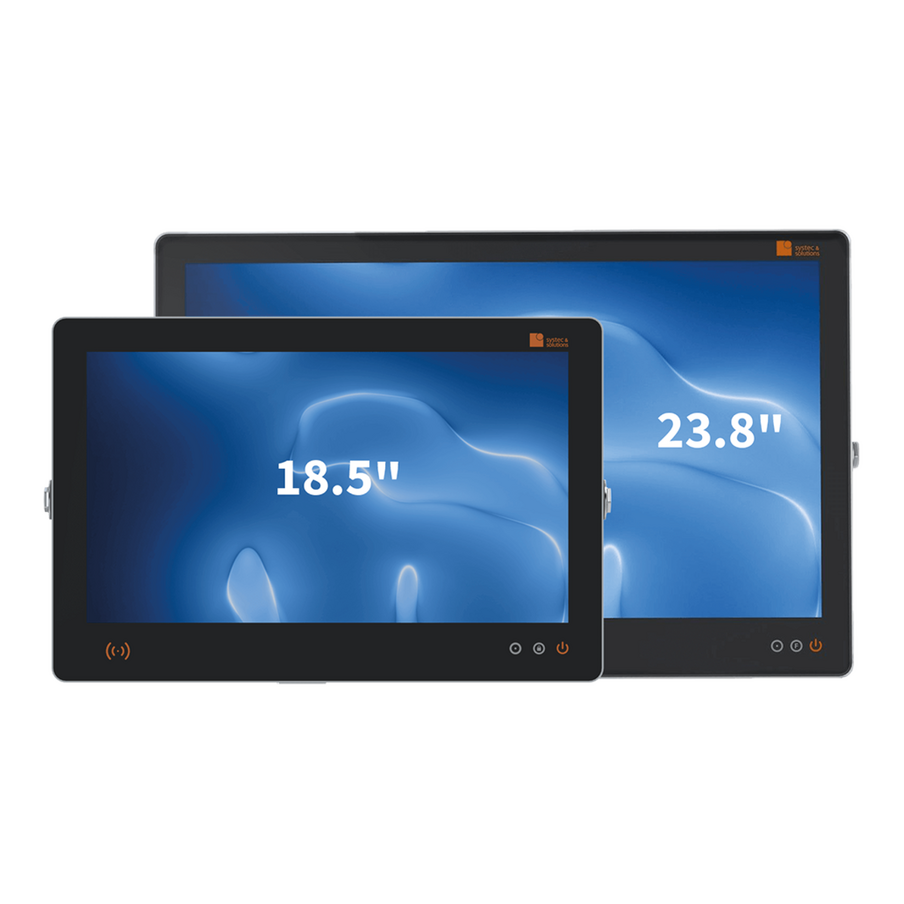

TWO MODELS FOR MAXIMUM FLEXIBILITY
Just like our PILOT, the PILOT EX is available in two different display sizes. The smaller model with an 18.5-inch display and the larger version with a 23.8-inch display offer you a choice between two perfectly sized options without compromising on the size of the chassis.
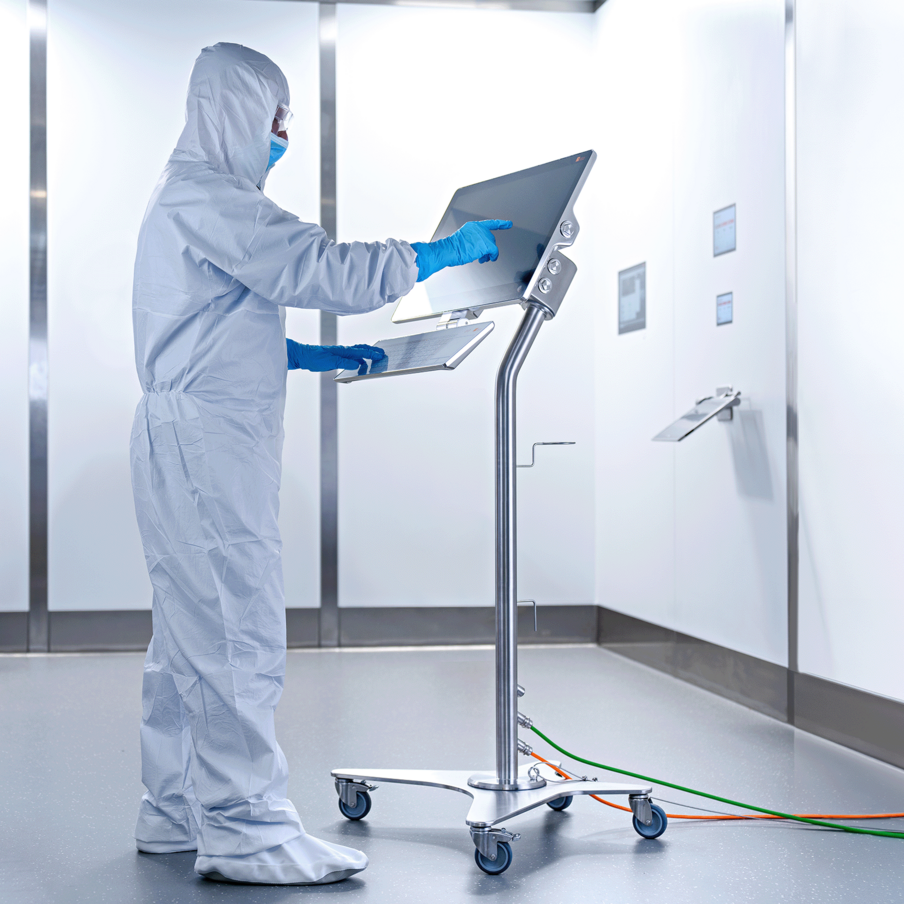
WORKSTATIONS AND KEYBOARD FOR HAZARDOUS AREAS
To complement the PILOT EX, we offer the TROLLEY SLIM EX – a modern workstation designed for hazardous areas. Combined with our glass keyboard KEYBOARD NG EX – also certified for use in hazardous areas – that features an integrated touchpad, this creates a comprehensive solution that combines modern design, ease of use and maximum functionality.
VARIANTS
- Available in 18.5" and 23.8"
- Configurable as a PC, monitor, or thin client
- Preconfigured variants: ENDPOINT, ALLROUND, PERFORMANCE, and MONITOR
- Custom configurations available
The Benefits at a Glance
 Modern, slim design with a frameless look
- Capacitive function keys – Power ON/OFF, Touchscreen Lock, customizable
- Durable, easy-to-clean stainless steel housing (1.4404/316L) with an electropolished finish
- IP66 and IP67 protection ratings
- Flexible operating system compatibility (including Windows®, IGEL OS, ThinManager, and more)
- Ergonomic keyboard with customizable shortcut keys and a multi-touch touchpad
Optional built-in RFID reader for added security
Examples of Use
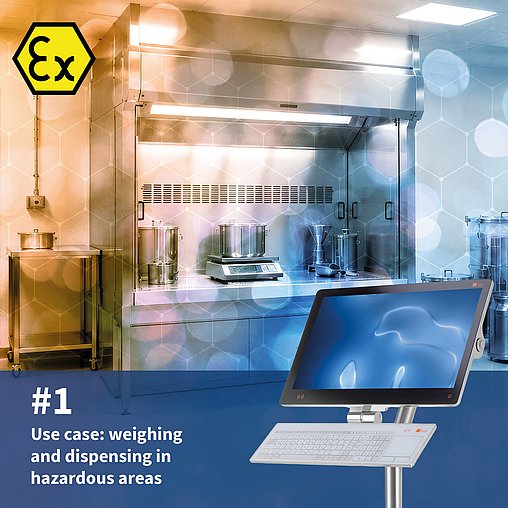
Weighing and dosing in explosive areas
In the weighing and dosing room, everything must work together seamlessly: precise weighing, clean dosing, complete documentation and a workstation that can be thoroughly cleaned between batches. When processing powdered active ingredients, excipients, or solvent-containing substances, flammable dusts or vapors can be generated. In such cases, a conventional cleanroom workstation is no longer sufficient, as the hardware used must be suitable for the classification of the potentially explosive area. The PILOT EX was developed specifically to meet these requirements.
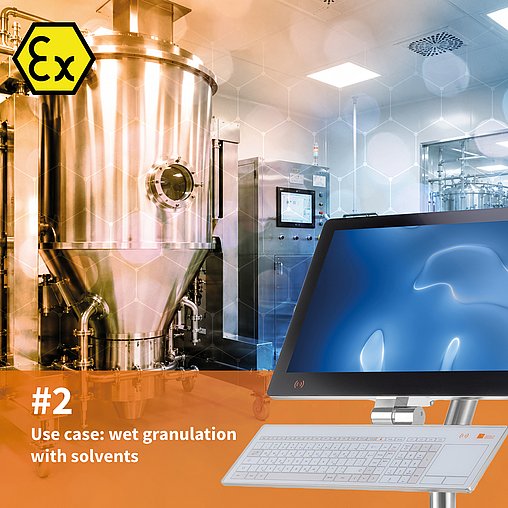
Visible Data in wet granulation
In wet granulation, the process must remain visible. Humidity, temperature, formulation status and system alerts should be available right where the work is being done: directly at the granulation line. When organic solvents such as ethanol are used, flammable vapors may form depending on the substance’s properties, concentration and room classification. In such cases, the cleanroom workstation must also comply with the applicable Ex-zone classification.
HMI operation during API synthesis directly at the reactor
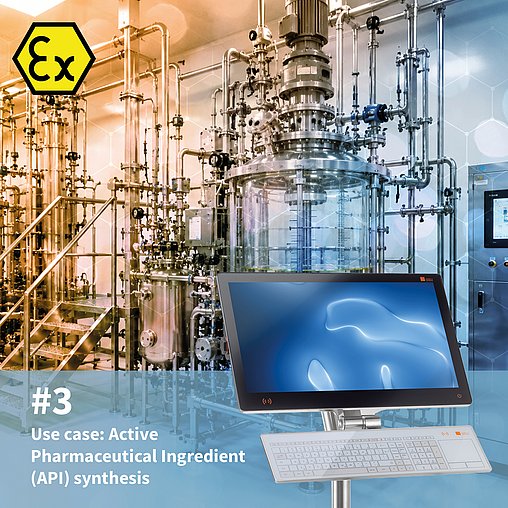
In API synthesis – the production of active pharmaceutical ingredients – a great deal of information converges directly at the reactor: process values, formulas, alarms, documentation and operational decisions made during the ongoing process. Especially when working with flammable solvents, the area surrounding the reactor may be classified as a potentially explosive atmosphere. In such cases, the operator interface and visualization technology used must also comply with this classification.
Fine particles in tablet production
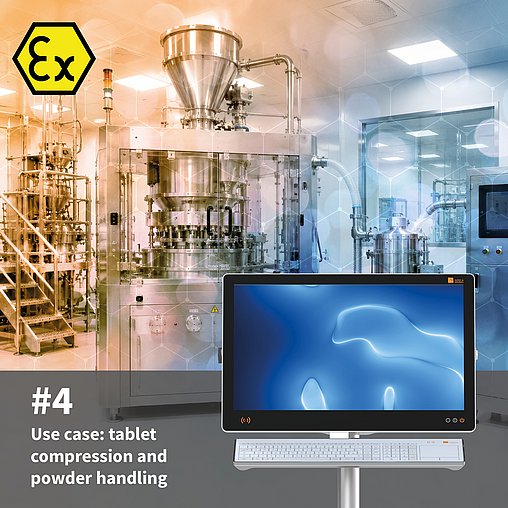
During tablet compression, grinding, or screening, dust is a common occurrence on the production line. Fine particles can settle or become airborne. Depending on the material properties, concentration and room classification, fine dust can be a factor in determining whether an area is classified as potentially explosive. In such cases, it is not enough to consider only the machine itself; the operator’s workstation must also be suitable for the production environment.
Filling of alcohol-based liquids
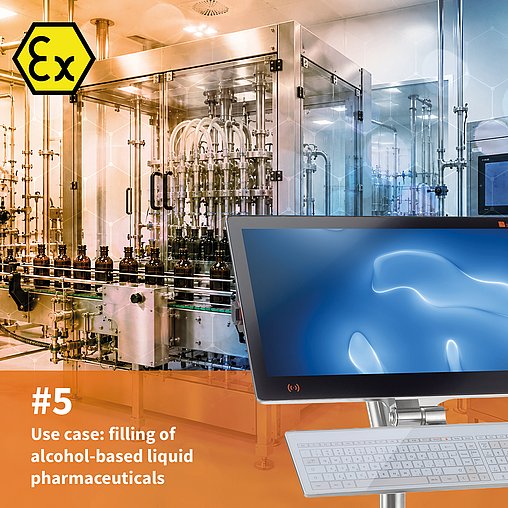
When filling alcohol-based liquid pharmaceuticals, high throughput isn’t the only factor that matters. Operators must quickly capture process data, clearly identify status messages and maintain a clear overview at all times – even as their perspective shifts along the filling line. At the same time, flammable carrier substances – depending on material properties, concentration and room classification – can form explosive mixtures of vapor and air. For example, ethanol has a flash point of about 13 °C. This illustrates why explosion protection plays a crucial role in the filling of alcohol-based products.


INQUIRY REGARDING THE PILOT EX
Use the form below to get more information about the PILOT EX or to request a product demo. Please provide your contact information and some details about your planned application. This will allow us to process your request quickly and provide you with the relevant information.
* Required fields